
Stainless Steel Surface Finish
No. 7 Stainless Steel Finish
Specifications, Supply & Technical Guide
No. 7 stainless steel finish is a high-luster, highly reflective surface produced by buffing a finely ground stainless steel surface while leaving fine polishing or grit lines visible. It is commonly selected for architectural and ornamental applications that require strong reflectivity without the more complete mirror-like smoothness associated with No. 8.
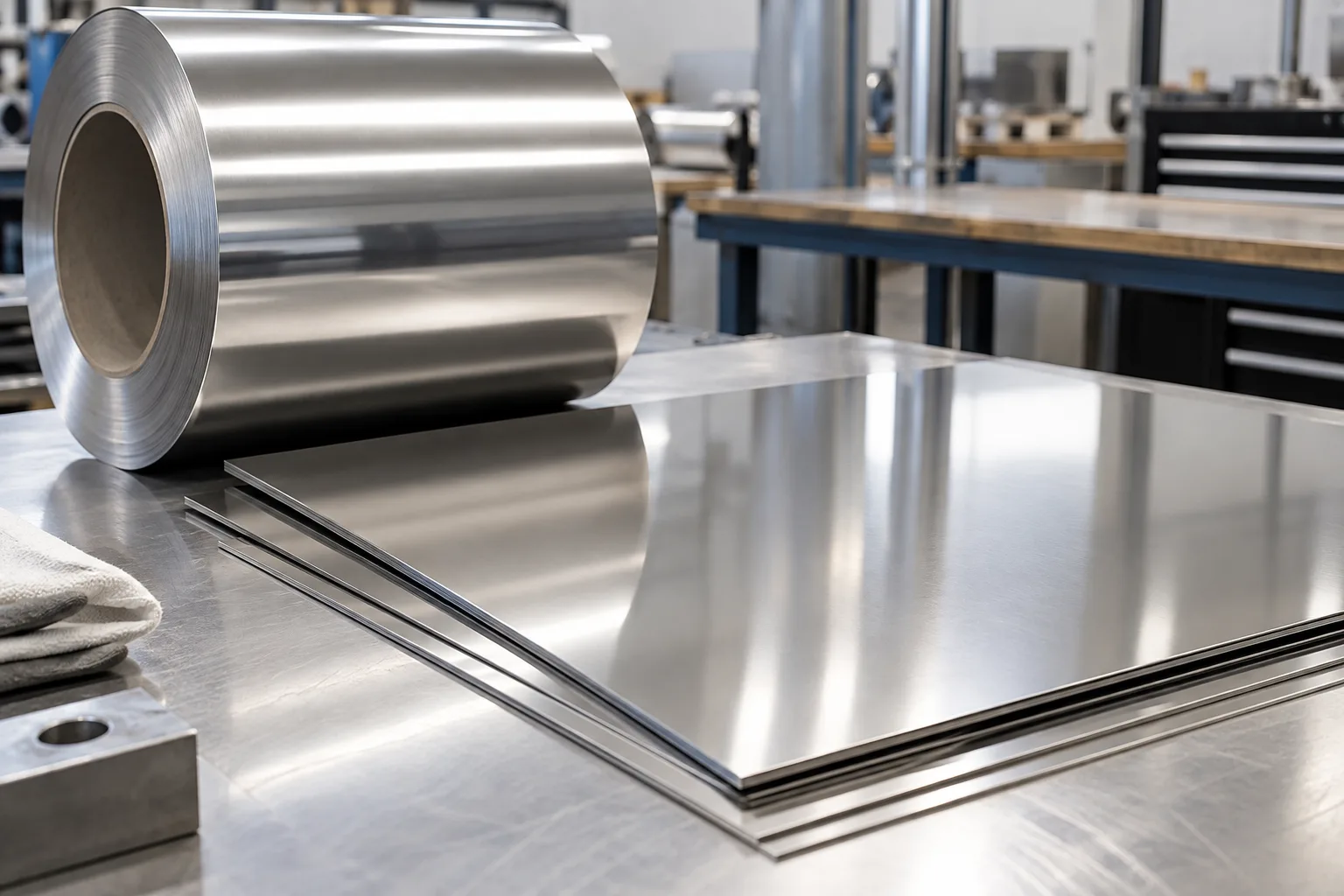 Illustrative No. 7 Surface
NO. 7
Illustrative visual reference only. Actual No. 7 reflectivity, line visibility and tone depend on the starting surface, fine grinding sequence, buffing process, alloy and supplier practice. Use an approved physical sample and controlled-light inspection for appearance-critical projects.
Finish Definition
What is a No. 7 stainless steel finish?
No. 7 is a highly reflective stainless steel finish produced by buffing a finely ground surface. The buffing increases luster, but fine grinding or polishing lines remain visible.
This makes No. 7 visually different from No. 8. No. 8 is generally smoother and more mirror-like, while No. 7 intentionally retains more visible line structure.
For repeatable procurement, specify the stainless grade, product form, starting surface, fine-grinding and buffing route, reflectivity / visual target, Ra / Rz if relevant, approved sample, acceptable line visibility and protection method.
Define these points before approving a No. 7 finish
- Stainless steel grade and product form
- Starting surface and fine-grinding / buffing route
- Reflectivity / gloss target where measurable control is required
- Ra / Rz range where surface roughness is critical
- Approved sample and acceptable visible polishing lines
- Color / tone tolerance where applicable
- Protective film, defect acceptance and cleaning guidance
Finish Evidence
Technical and application evidence for No. 7 finish approval
Because reflectivity is a defining characteristic of No. 7, use controlled-light evidence instead of relying on a generic decorative photo. The page keeps the total image count to three.
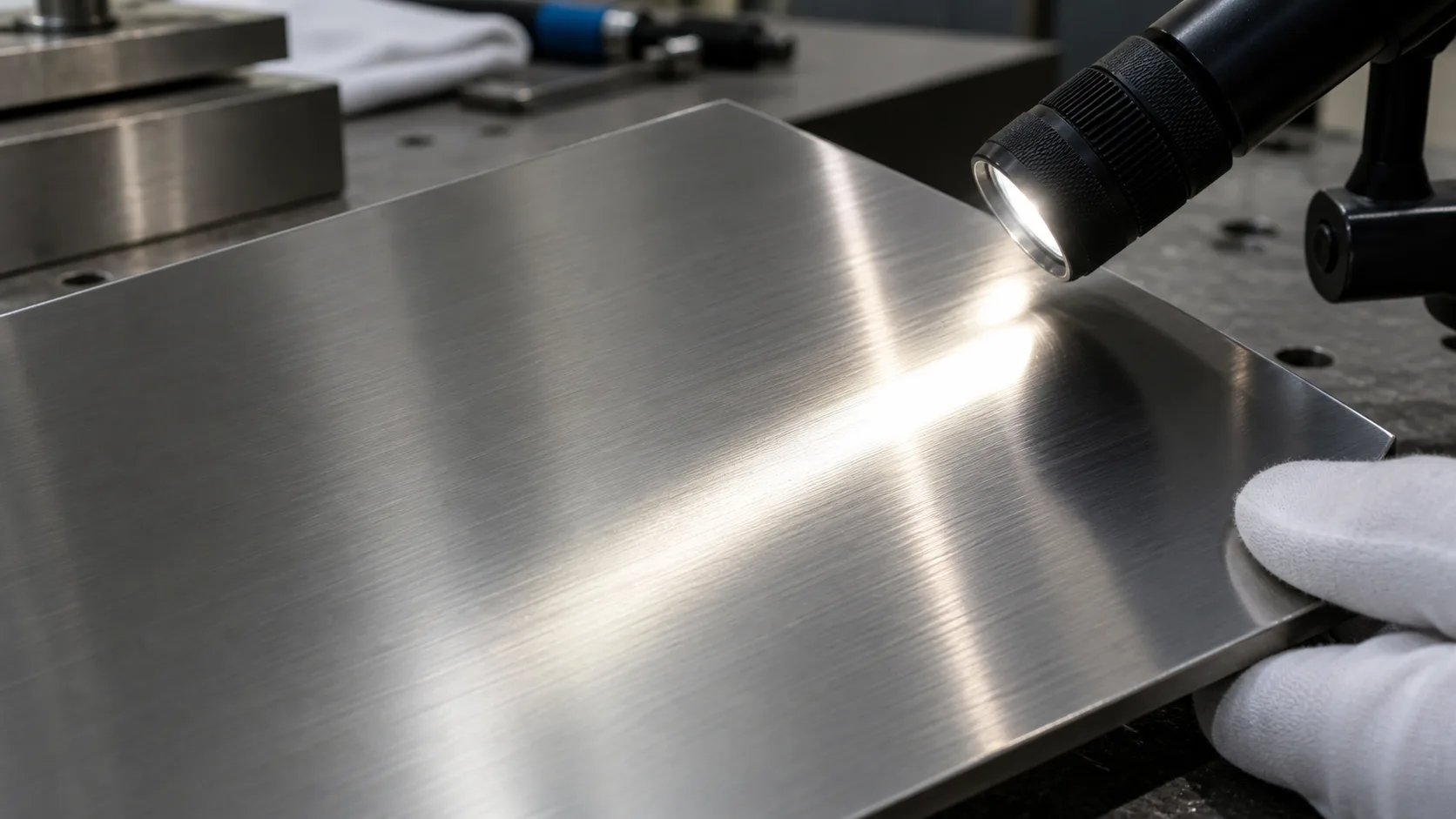
Technical evidence image
Use one combined image showing the real reflective surface, visible fine polishing lines, approved sample and, where applicable, reflectivity or Ra / Rz measurement.
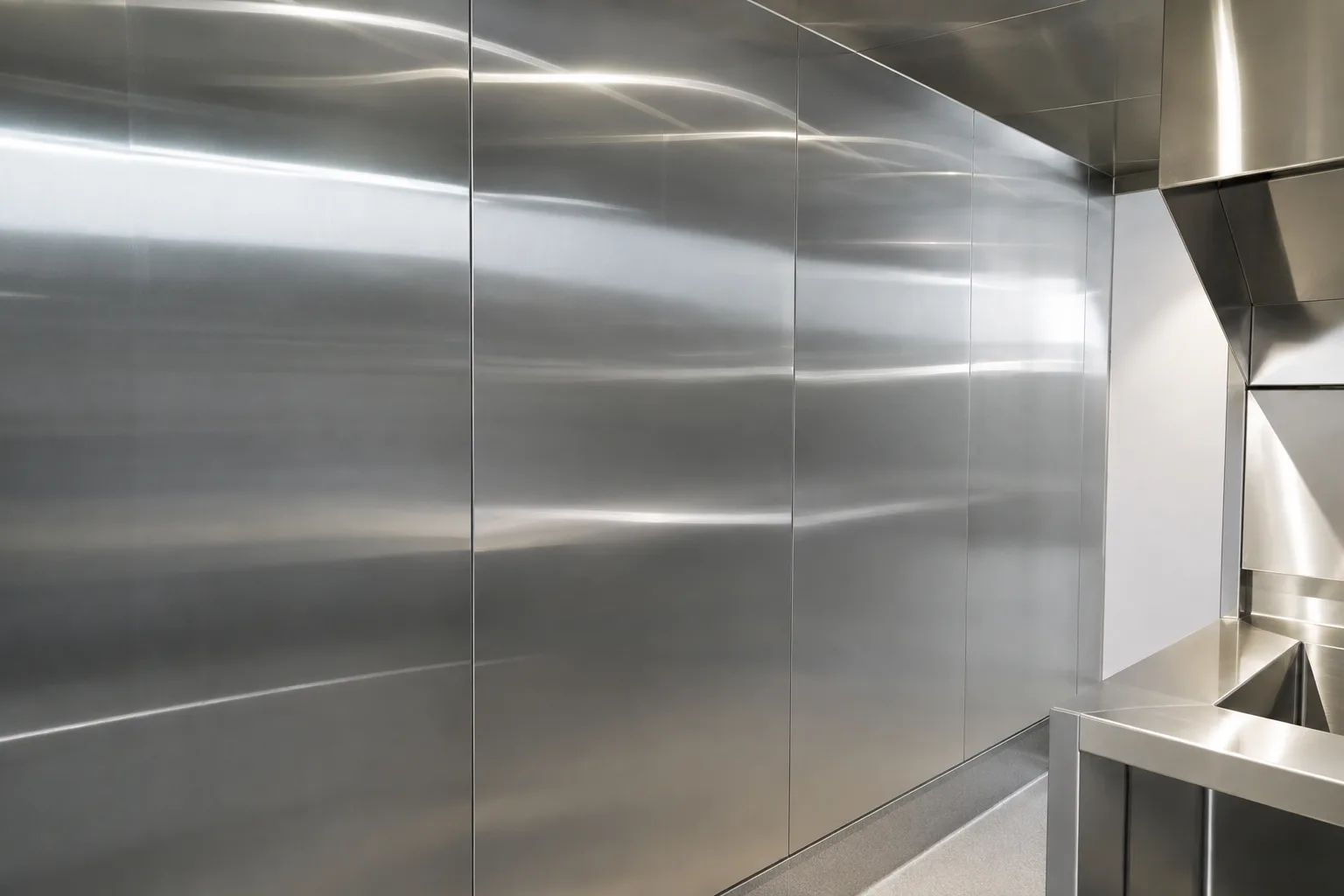
Application image
Use one real architectural or ornamental application photo showing the actual No. 7 high-luster surface.
Supply Specification
No. 7 finish stainless sheet, architectural panel and fabricated-part ordering matrix
No. 7 is often a custom polished finish rather than a routine stock condition. Confirm actual availability, reflectivity target and surface matching before quotation.
Specify grade, thickness, dimensions, finished side, approved sample and surface target.
Add panel orientation, reflectivity matching, line visibility and protective handling requirements.
Provide drawings, visible zones and post-fabrication blending / buffing requirements.
| Supply Form | Required Order Data | No. 7 Surface Control | Processing / Delivery Notes |
|---|---|---|---|
| No. 7 Sheet | Grade, thickness, width, length, quantity, tolerance and finished side | No. 7 designation, approved sample, reflectivity / Ra-Rz if required and defect criteria | Confirm polishing route, film / interleave and packaging |
| Architectural Panel | Grade, dimensions, panel layout, quantity and orientation | Control reflectivity, tone, grit-line visibility and panel-to-panel consistency | Use limit samples for large visible installation areas |
| Cut / Formed Blank | Grade, thickness, blank dimensions, drawing and visible surface | Define whether final No. 7 buffing occurs before or after forming | Protect the visible face during cutting and fabrication |
| Fabricated Part | Drawing, grade, dimensions, quantity and finish zones | Define local blending / buffing, line visibility and final sample criteria | Confirm final buffing sequence before production |
Availability, dimensional limits, achievable reflectivity and visual matching capability must be confirmed in the actual quotation.
Finish Selection
No. 7 vs No. 8 vs No. 4 vs No. 6 stainless steel finish
No. 7 sits between satin / directional polished finishes and the more completely mirror-like No. 8 finish.
| Finish | Visual Character | Process Character | Selection Logic | Specification Note |
|---|---|---|---|---|
|
No. 7
This Page |
High luster, highly reflective, fine grit lines visible | Finely ground surface followed by buffing | When strong reflectivity is wanted without full mirror smoothness | Specify sample + line visibility + reflectivity |
| No. 8 | Highly reflective, smoother, mirror-like | Progressively finer polishing followed by buffing | When the closest ASTM mirror-type finish is required | Polishing lines should be much less visible than No. 7 |
| No. 4 | Directional satin / brushed polish | Mechanical linear polishing | When lower reflectivity and visible linear texture are acceptable | Substantially less reflective than No. 7 |
| No. 6 | Dull satin, low reflectivity | Traditionally Tampico brushed from No. 4 | When a subdued satin appearance is preferred | Opposite visual direction from high-luster No. 7 |
Processing Route
Typical production route for No. 7 stainless steel finish
A repeatable No. 7 surface requires control of the starting surface, fine grinding, buffing, reflectivity inspection and final handling.
Define Starting Surface
Confirm grade, dimensions and the incoming surface before fine grinding.
Fine Grinding
Produce a controlled finely ground surface suitable for later buffing.
Buffing
Increase reflectivity while retaining the fine line structure characteristic of No. 7.
Surface Measurement
Check reflectivity, gloss or Ra / Rz where measurable criteria are specified.
Controlled-Light Inspection
Compare line visibility, tone and reflectivity against the approved sample.
Protect & Pack
Protect the high-luster face from scratches, fingerprints and transport damage.
Surface Control
Roughness, production route, reflectivity and cleaning guidance
The content matrix requires unique, reviewable finish data. Do not publish invented Ra/Rz or reflectivity values; replace these controls only with approved production or test data.
Ra / Rz & Production Route
No. 7 is defined primarily by a high-luster buffed appearance, not one universal roughness value. The actual surface depends on the grinding and buffing sequence.
- Ra target: specify only when required
- Rz target: specify only when required
- Measurement method / direction: define before inspection
- Route: finely ground surface + controlled buffing
Reflectivity, Color & Defect Acceptance
Reflectivity is a key No. 7 characteristic, but line visibility remains part of the accepted finish.
- Define reflectivity / gloss where critical
- Define acceptable visible fine polishing lines
- Set scratch, haze and local-buffing criteria
- Use controlled-light limit samples for panel matching
Grades, Film & Cleaning
Confirm compatible grades and forms in the quotation. The high-luster face requires careful protection and cleaning.
- Grade / form: confirm by quotation
- Protective film / interleave: specify where compatible
- Use non-abrasive cleaning methods
- Avoid uncontrolled re-buffing after final inspection
Application Guidance
Where is No. 7 stainless steel finish used?
No. 7 is most relevant where a decorative stainless surface needs high reflectivity but a fully mirror-like No. 8 finish is not required.
Architectural Wall Panels
High-luster decorative panels requiring controlled reflectivity and line visibility.
Column Covers
Ornamental stainless covers where a bright reflective surface is part of the design.
Decorative Trim
Architectural trim and details where high luster is desired without full mirror polish.
Elevator / Interior Panels
Selected interior components where controlled reflectivity and premium appearance are required.
Retail & Hospitality
Fixtures and decorative surfaces where bright stainless enhances visual presentation.
Custom Ornamental Parts
Drawing-controlled parts requiring a defined reflective finish and final buffing.
Standards & Equivalence
How No. 7 finish is specified for stainless steel sheet
ASTM finish terminology describes No. 7 as a highly reflective finish produced by buffing a finely ground surface while leaving grit lines visible. The purchase order should still define measurable and visual acceptance criteria.
- ASTM A480 / A480M — No. 7 No. 7 has a high degree of reflectivity and is produced by buffing a finely ground surface while retaining visible grit lines.
- Architectural / ornamental use The finish is chiefly associated with decorative, architectural and ornamental applications.
- Ra / Rz and reflectivity Add measurable roughness, gloss or reflectivity criteria only where the project requires them.
- Visual approval Use an approved sample / limit sample to control grit-line visibility, haze, tone and final reflectivity.
Do not specify No. 7 as “mirror finish” without qualification.
No. 7 is highly reflective and may appear mirror-like, but visible fine polishing / grit lines remain part of the finish.
No. 8 is generally the smoother, more completely mirror-like ASTM finish and should not be substituted without visual approval.
For critical architectural work, approve a representative sample, define the expected reflectivity and agree the inspection method before production.
Technical FAQ
No. 7 stainless steel finish FAQ
What is a No. 7 stainless steel finish?
Is No. 7 stainless steel a mirror finish?
What is the difference between No. 7 and No. 8 stainless steel?
What is the typical No. 7 surface roughness?
How is No. 7 stainless steel produced?
Can No. 7 stainless steel be used for architectural panels?
How should No. 7 stainless steel be cleaned?
What information should be included in a No. 7 stainless steel RFQ?
Related Resources
Continue your stainless steel specification
Technical Evidence & Review
Data sources and document control for this No. 7 finish page
Required evidence sources
- Ra / Rz values should come from actual measurement records when roughness is part of the specification.
- The fine-grinding and buffing route should match the actual supplier process or production specification.
- Reflectivity and line visibility should use controlled-light close-ups and an approved / limit sample.
- Compatible grades, forms, protection and processing claims should match current quotation capability.
- Application images should be real project, production or permission-cleared evidence.
Document control
Technical Quote
Request a technical quote for No. 7 stainless steel
Send the grade, dimensions and reflective-finish target together. For No. 7, include a reference sample or image and define acceptable polishing-line visibility and any measurable reflectivity / roughness requirements.
- Stainless steel grade
- Sheet, panel, blank or fabricated part
- Thickness × width × length
- Required quantity
- No. 7 finish requirement
- Finished side + reference sample
- Reflectivity / Ra-Rz / line-visibility limits if required
- Protective film / fabrication requirement
- Destination, due date and inspection needs